
Where every trail leads to discovery and every summit tells a story.
 - Copy.jpeg)
Where the journey is as breathtaking as the destination.

And in return, let them conquer your soul.
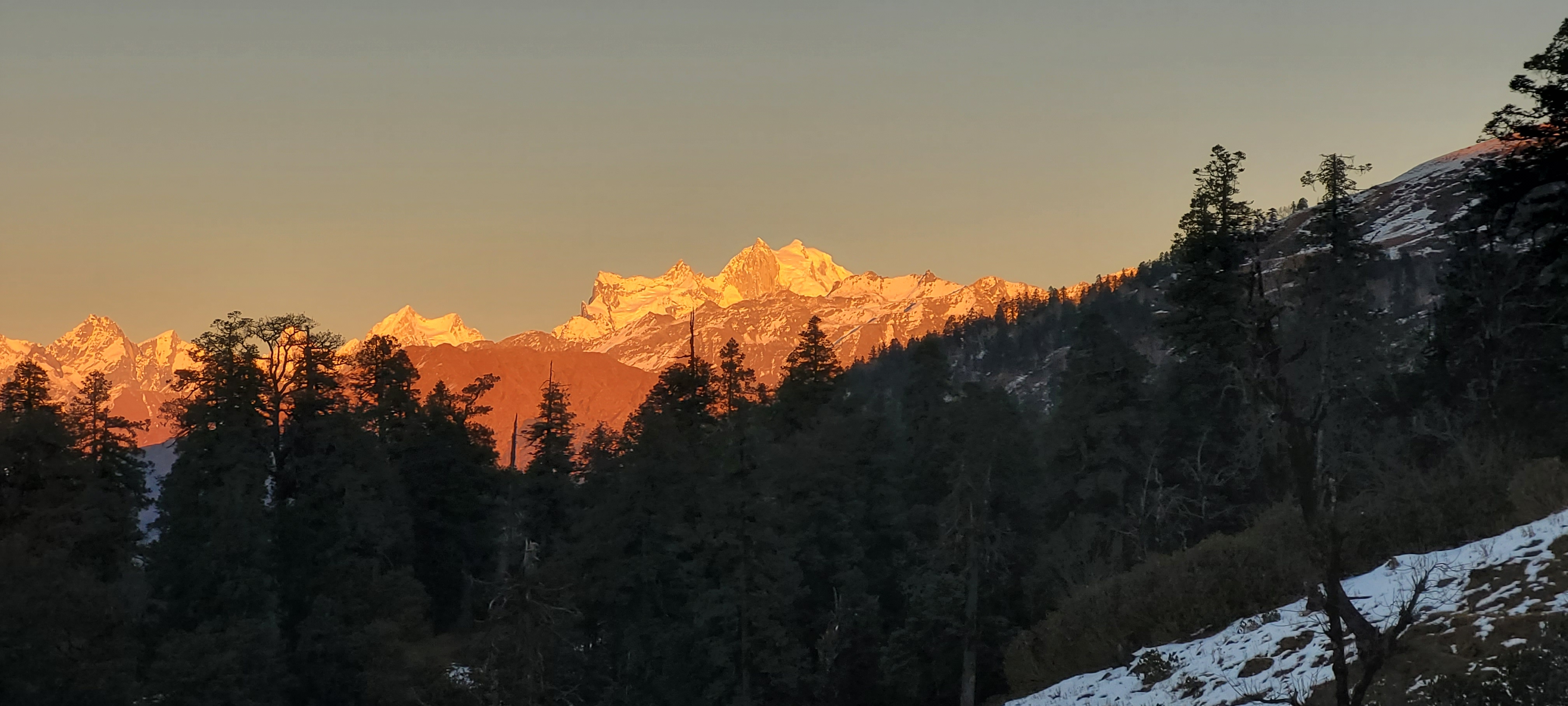
The P.A. forms the upper catchment of Tons river which is the most important tributary of famous holy river Yamuna in its upper reaches. Thus the area has a significant values as a major watershed for river Yamuna, which is a very important river for the Indo-Gangetic plains. The area houses a lot of endangered wild animals and its large area along with the contiguous forests of the neighbouring forest divisions which helps in maintaining genetic diversity and continuity. The area is very rich in medicinal plants, many of which form the basis for certain life saving drugs. The scenic beauty of the area is unmatched. The Snow leopard inhabits the inner Himalayas, above the altitude of 3500 mt. which is most rare and endangered species of the P.A. The rich biodiversity, rolling large meadows, criss-cross dancing rivers and streams, high altitude lakes, snow clad peaks and unique social and cultural style of the area altogether represent unique scenic beauty which is unparallel in the entire Himalayas and as such the area has a great tourism potential. Many high altitudinal lakes such as Judatal, Ruinsara Tal, Saru Tal, Bharadsar Tal and Morinda Tal, which provides specific microhabitat for number of rare, endangered and threatened taxa. GWLS/N.P. has different altitudinal gradients ranging from 1300 mt. to 6323 mt. i.e., from sub-tropical, sub-temperate, temperate to high alpine meadows, therefore, areas like Taluka, Osla, Har-Ki-Dun, Devkyara, Kedarkantha, Jakhol, Changsil, Baincha, etc. represent important and unique flora of the region. The traditional culture and religious practices of the local peoples are also unique. The villagers worship the KAURAVAS and DURYODHAN is the main deity. The temples have beautiful wood carvings and are designed in a different style. The temple of KARNA at Deora village and the temple at Jakhol village are particularly beautiful. The Himalayan high ranges are of critical importance for their rich biodiversity and unique ecosystems. Due to great variation in altitude and aspect inside the P.A., support enormous plant diversity including several threatened plants of high medicinal value. The Govind Wildlife Sanctuary/NP falls within the Biotic Province 2 B (Western Himalaya) as per the Bio-geographic Classification by Rodgers & Panwar (1988). The tract harbours a rich array of habitats, vegetation types and floral and faunal communities typical of temperate – alpine regions.
Govind Wildlife Sanctuary & National Park
Uttarkashi, Uttarakhand
248140
Govind Wildlife Sanctuary & National Park
Uttarkashi, Uttarakhand
248140
Govind Wildlife Sanctuary & National Park
Uttarkashi, Uttarakhand
248140